
Learn to use 3-note arpeggios to create chord progressions that sound great!
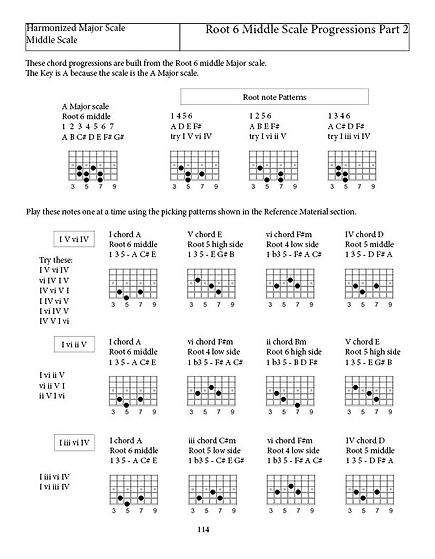
Some progressions are shown in the open position.
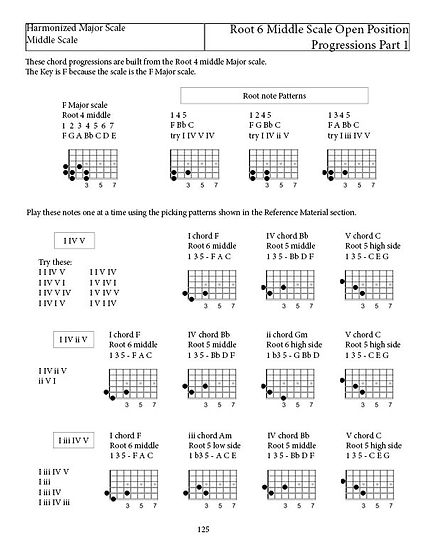
Play the notes from low to high using patterns such as these

Special Offer
$39.95 Introductory Price when ordering from this website
(Regular Price $69.95)
Triad this Progression
One Note at a Time
has 450 pages
(Less than ten cents per page)
Get
Triad This Progression
One Note at a Time
at a special introductory price of $39.95
(Regular price $69.95)
ISBN 979-8-9950049-1-2
Paperback with 450 pages
About
Triad This Progression: One Note at a Time teaches how to create chord progressions using triads played one note at a time (arpeggio style). It is a reference manual with hundreds of pages of chord progressions and an instruction manual that teaches the basics of creating 3-note arpeggios and how to place them on the fretboard to create many different chord progressions.
-
Learn to create Major, minor, harmonic minor, and melodic minor scales
-
Learn to create Major, minor, Augmented, and diminished arpeggios
-
Learn different ways to create chord progressions using 3-note arpeggios
Triad This Progression is a comprehensive study of using Major, minor, Augmented, and diminished arpeggios to create chord progressions. Everything is taught in a musical way in bite size pieces. The focus is on playing and not being slowed down by music theory.
Each progression has three options with different triad and scale shapes. Each of those options is shown for each string set and has its own fretboard diagrams. All of the arpeggios are shown using fretboard diagrams and include chord name, note names, note numbers, and the Root location.
This is a reference book most guitarists will want to have in their collection. It includes:
-
Major I IV V and minor i iv v progressions
-
Harmonized Major scale
-
Octaves
-
Progressions created from Major scale shapes
-
I IV V Progressions with II, ii, or bVII
-
Learn to play progressions in open position
-
Circle of Fifths movement
-
Progressions with borrowed chords bIII, bVI, and bVII
-
Minor Keys
-
Harmonized minor scale
-
Harmonized harmonic minor scale
-
Harmonized melodic minor scale
-
Minor scale progressions
-
Harmonic minor scale progressions
-
Melodic minor scale progressions
When we play progressions using arpeggios we get a better understanding of the fretboard. Arpeggio progressions teach us how to move from the Root of one chord to the Root of another. This helps us learn where notes and arpeggios are located relative to each other. When we learn these locations we can create all sorts of arpeggio progressions without needing to think too hard.
ISBN: 979-8-9950049-1-2
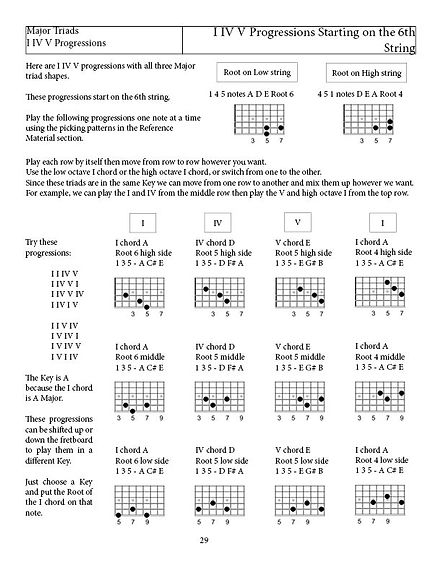
Major I IV V Progressions help us learn the Major arpeggio shapes
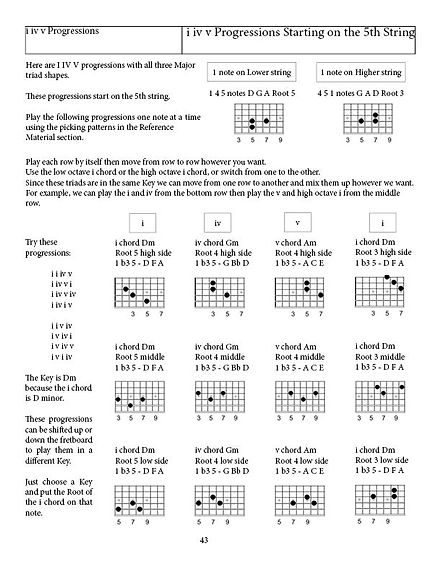
minor i iv v progressions help us learn the minor arpeggio shapes
Harmonizing the scales helps us learn the arpeggios that are created from the scale
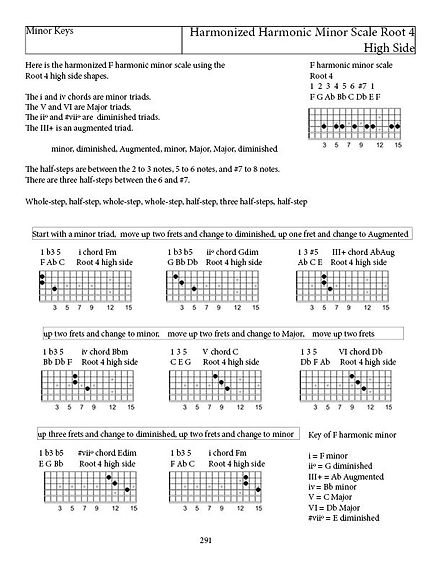
Use scale shapes to locate the Root notes of a progression then place an arpeggio shape on each Root
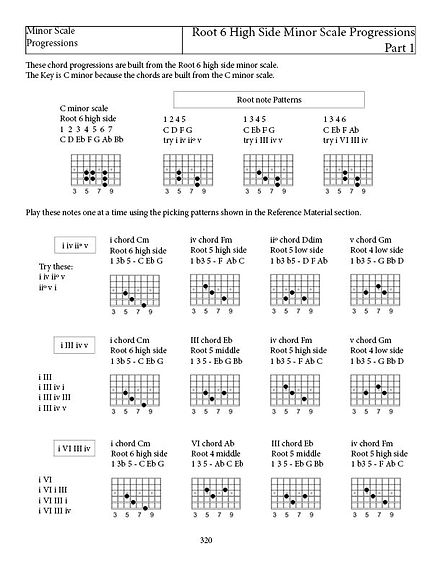
Includes minor Keys
Learn minor scale progressions
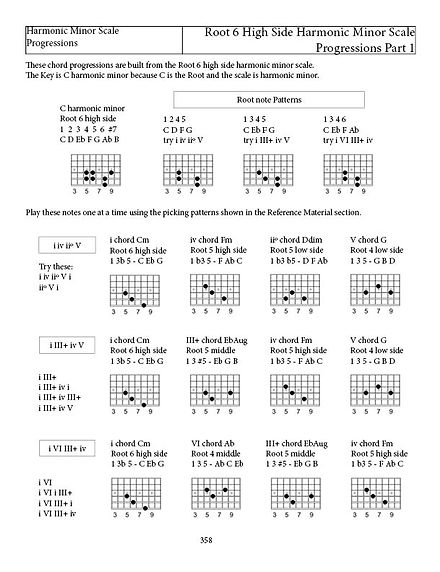
harmonic minor scale progressions
and
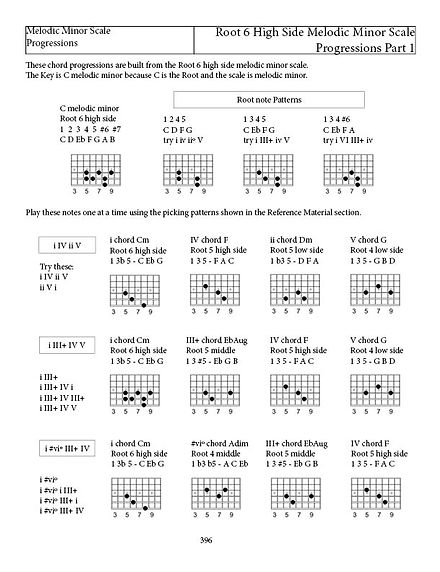
melodic minor scale progressions
Minor Scale Progressions
Harmonic Minor Scale Progressions
Melodic Minor Scale Progressions
The Purpose
I've been playing guitar since 1980 and have read many guitar books. I love to pull a guitar book off the shelf and see what I can learn. There are lots of great books on the market but I always wanted something different.
I want a book I can open to a random page and just start playing without needing to read an explanation or memorize TAB.
I want to learn how to play chord progressions on the fly using arpeggios. If my friend wants to jam on a I iii vi IV progression in the key of G, then I want to know how to play that without needing to sit down and figure it all out.
I want to learn use arpeggios to create chord progressions all over the fretboard so I can add variety to my playing.
I want to learn to play minor Keys. I want to know the difference between the Major scale, minor scale, harmonic minor scale, and melodic minor scale.
I want to build a foundation based on playing arpeggios. I want to understand the basic arpeggio shapes and different ways to connect them. I want to learn to play lots of different chord progressions using arpeggios.
I wrote this book to help me learn the things I really wanted to learn from other books.
The focus of this book is on playing music.
It includes lessons and music theory and then it shows chord progressions with fretboard diagrams so we can play right away without needing to think too hard about the theory.
This is a simple book with many examples. Use it to build your own foundation based on arpeggios. Then expand your foundation with all your other studies.
Triad This Progression
One Note at a Time
has 450 pages
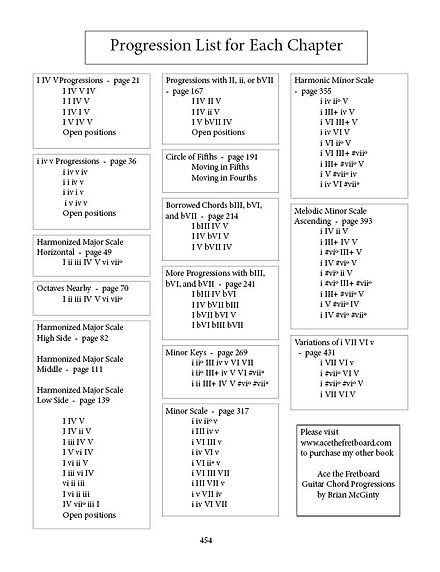
Here is a list of the progressions included in the book
Ready to Play
Hundreds of Chord Progression Examples
Triad This Progression: One Note at a Time has hundreds of pages of chord progressions that are ready to play using fretboard diagrams.
Instructional
Learn to Create Many Popular Chord Progressions using Arpeggios
Triad This Progression: One Note at a Time teaches how to use 3-note arpeggios to create chord progressions. Learn to create scales. Use scales to create arpeggios. Learn to locate the Root notes of progressions then place an arpeggio shape on each of the Roots.
Music Theory
Lessons Briefly Explain the Theory of using Major and minor Scales to Create Arpeggios and Chord Progressions
Triad This Progression: One Note at a Time explains the the music theory needed to construct scales, arpeggios, and progressions. The lessons are brief so we can put the focus on playing music.